
Sandy Awarded Oregon Heritage Grant For Collection Improvement
By Abby Haney
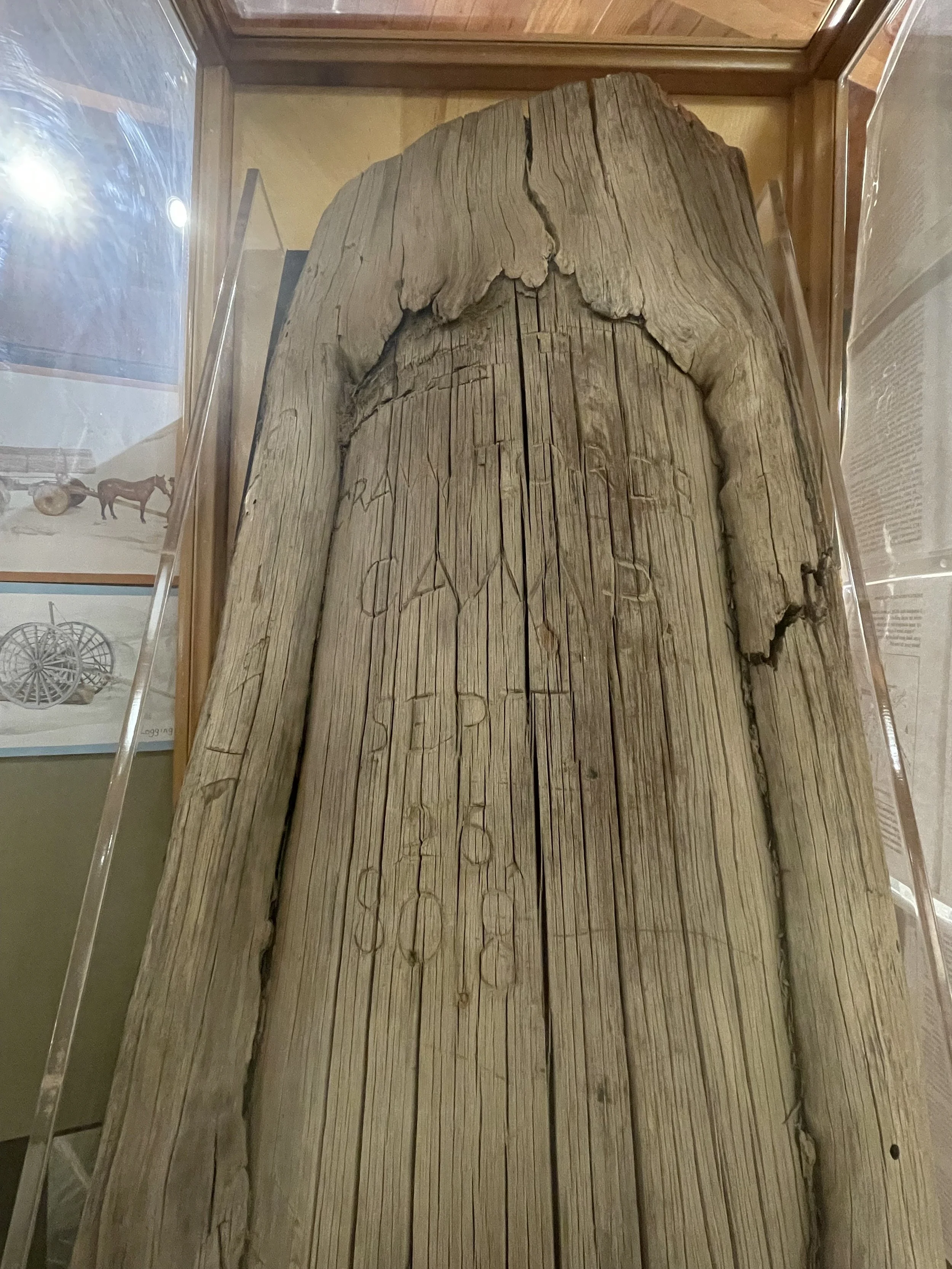
A hemlock tree with “Crawford’s Camp Sept. 25 1808” engraved in it is one of the oldest artifacts in the museum's collection. However, meaning, origin and more remains a mystery.
Sandy Historical Society has been working diligently to update the museum’s collections policies and assess the state of the museum’s collections. In the last few months the museum was awarded not one, but two grants to accomplish this goal: an Oregon Heritage Grant and an Oregon 250 Grant.
The Oregon Heritage Grant is given to projects that preserve, develop or interrupt Oregon’s cultural heritage. Due to this broad coverage, museums can especially benefit from its funding. Sandy Historical Museum is specifically using these grants to perform a collections assessment to better understand the collection and receive professional guidance on how to manage and improve it.
“This project will establish guidance for all of the future work related to the collections and can provide support for accessing additional support and funding,” Oregon Heritage Grants and Outreach Coordinator Kuri Gill said.
Preserving history is especially important due to its impact on communities. Sandy, being a small community, will benefit from their history and heritage being preserved for future generations as it supports their growth.
“This work helps build strong communities; people can learn about their community, develop understanding and connect with each other. It can highlight a community's unique character and inform change,” Gill said.
According to Gill,“When the full heritage of a community is preserved and shared, it can be an anchor for the community. It is a way to welcome new people and engage everyone in what the future of the community will be.”
The Sandy Historical Society Museum’s collections assessment project has three steps: collection survey, collection planning and training. Relicura, a historical research and collection management consultant will be working with the museum to complete this important work.
“Our goal working with clients is to help them get a snapshot and a better sense of what they have and what shape they are in and answer questions about their collection especially when they have goals of wanting to do more,” Relicura Founder and Director Rachael Woody said.
The first step, collection survey, is to identify, document and review the collection to create a summary report and help museum staff understand what is included in the collection. Collection planning, the second step, will give the museum a framework for what items and records should be included in the collection going forward. After the first two steps are completed, they can do the collection training to educate the museum’s board and staff members on best practices and procedures.
“The framework is the same and actions but it can look very different from where we are and what we are working with,” Woody said. “For us, we developed this framework because it is most supportive of meeting the museums where they are at.”
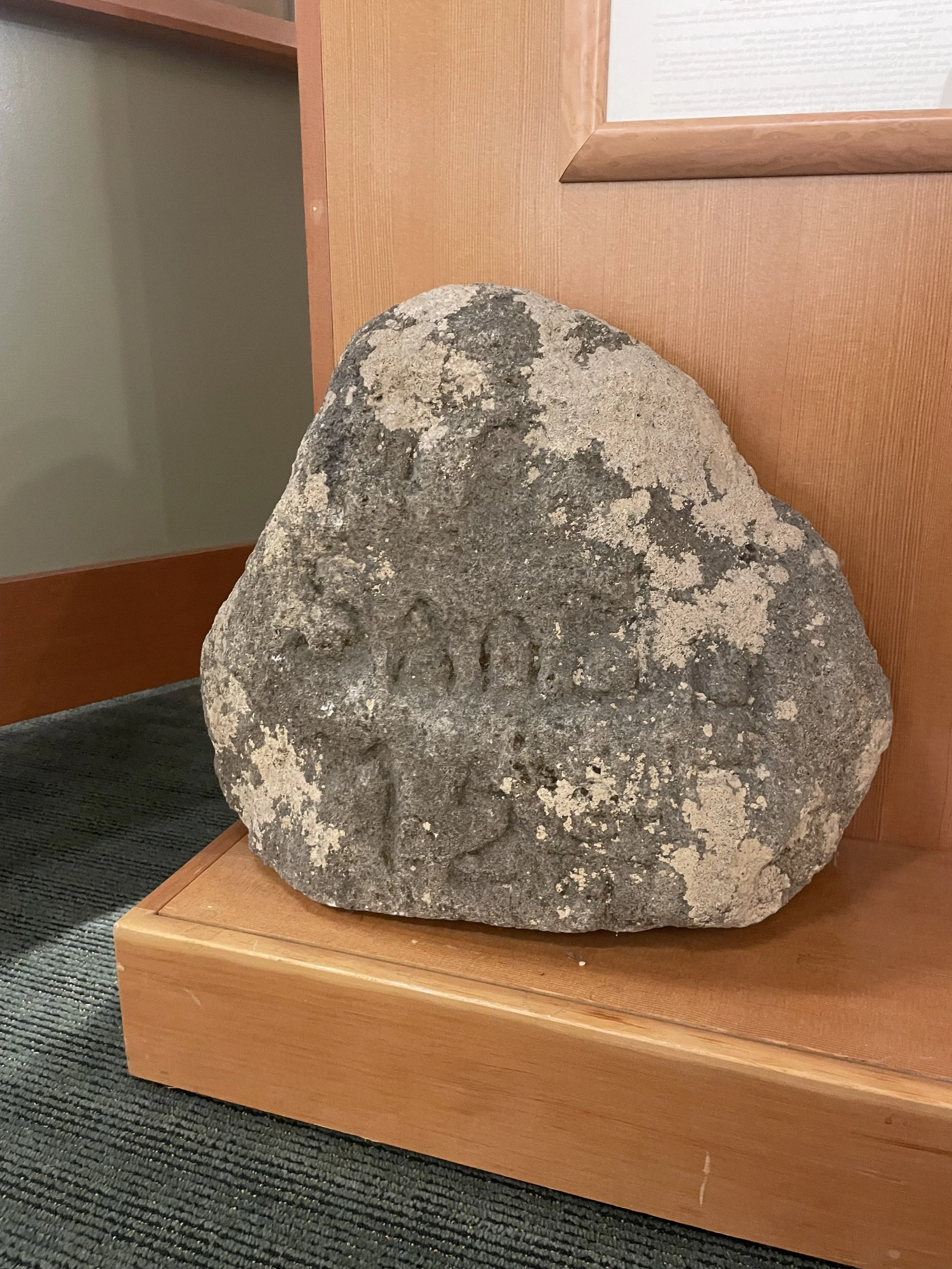
Located in the museum for viewing is a barlow road stone mileage marker found between 1934-44 with “To Sandy 1.2 3/4 mi.” engraved on it. This is one item in the Sandy Historical Society collection that will be assessed to improve its offerings.
Museums are an important factor in preserving, developing and interrupting history. Using this grant, Sandy Historical Society can advance, even as a small museum in a small community, in order to represent their community, a factor in their goal.
“Highlighting the role of small museums in particular is really important in local communities as it’s our history,” Woody said. “Especially now when museum funding can be an issue that makes it all the important to celebrate museums and forward the momentum [Sandy Historical Society Director] Nicole has been able to generate.”
Collections, even though they reside in museums, don’t belong to museums. They belong to the public and it's the museum’s job to protect it for the people and the future.
“These collections belong to the people. They belong to the sandy community. They belong to Oregon history. It is such an important job that museums take the greatest care they can so they can last as long as possible,” Woody said.
Visit the Sandy Historical Society to see their wide variety of offerings and learn more about the history of small town Sandy.
Abby Haney is the Editor-In-Chief at Sandy High School for the Pioneer Press and is a writer at large for The Sandy Historical Society.
